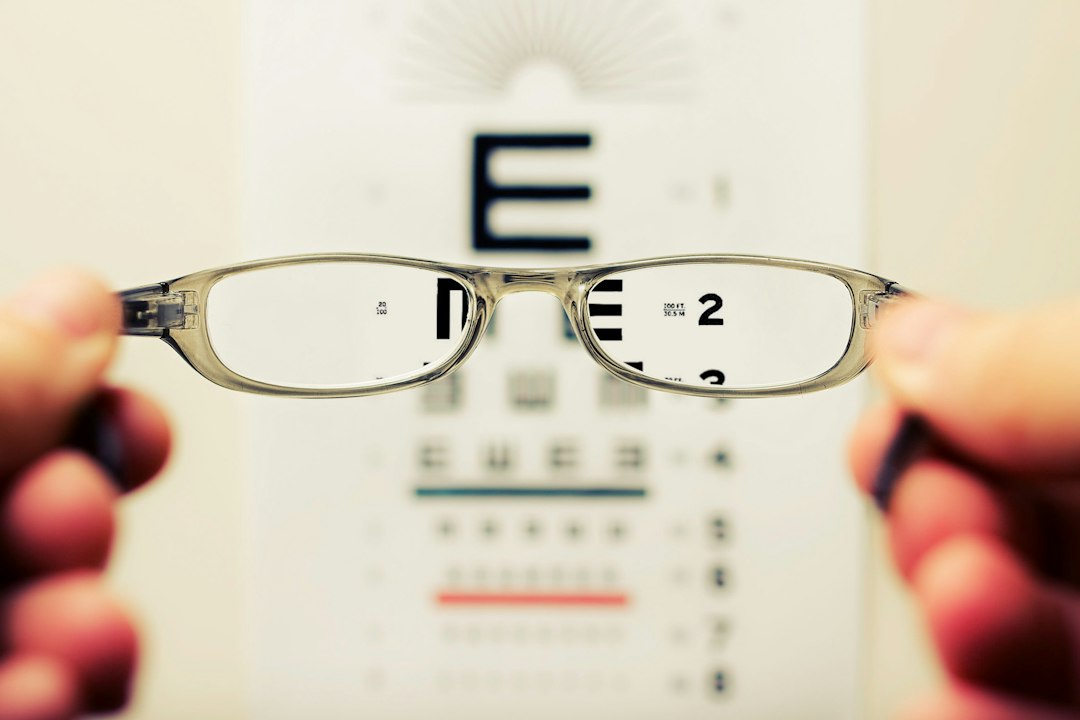
Visual acuity is useful, but it does not describe every demand placed on sight. Someone may identify small letters yet have difficulty finding a cup on a crowded bench, judging a kerb or copying work from a whiteboard. Questions about dressing, mobility, reading, play and visual fatigue reveal how vision functions during ordinary routines. A non-verbal patient may communicate through reliable behaviours, such as moving closer, shutting one eye, turning away from glare or missing objects on one side. Carers should mention when these patterns occur, rather than assuming they are simply inattention.
Testing can be adapted to development, communication and attention. Matching cards, pictures, large symbols and preferential-looking tasks may be more suitable than a letter chart. Refraction, which checks whether lenses could focus light more accurately, may also need a different approach when spoken feedback is limited. Objective readings from instruments can guide the clinician, but they are interpreted alongside the person’s history and behaviour. A teenager who cannot name letters might match shapes consistently, giving the practitioner useful information without forcing an unsuitable response. Short breaks can help show whether performance changes with tiredness.
Some people have usable sight that remains restricted even with an accurate spectacle prescription. A low vision assessment considers practical factors such as reading distance, illumination, print size and contrast. Contrast sensitivity is the ability to distinguish an object from its background, so a pale step against a similarly pale floor may be hard to see. The discussion should begin with a specific goal, such as reading a bus number, finding food on a plate or recognising a teacher across a room. A low vision assessment can then connect that goal with lighting changes, positioning, magnification or other workable strategies.
Cerebral Visual Impairment, commonly called CVI, can affect the way the brain interprets visual information even when the eyes appear healthy. A person may recognise a familiar object in one setting but not another, become overloaded by a busy background or need extra time to identify what is being shown. Assessment draws on developmental and medical history, observation and carefully selected tasks rather than one isolated result. Support may involve reducing clutter, improving contrast, presenting one item at a time and allowing longer processing. Notes from school or therapy can be useful because behaviour may differ greatly between a clinic and a classroom.
Bioptic telescopes may suit selected distance tasks, such as locating a sign or identifying a speaker, but they are not suitable for everyone. These small telescopic systems are mounted within or above spectacle lenses and require practice with head position, focusing and switching between ordinary and magnified views. A proposed aid should be tested against the person’s actual routine. For a student, that might mean trialling distance information in a classroom rather than judging it only in a quiet consulting room. The clinician also needs to discuss where the device will be stored, who will support practice and which tasks matter most.
Preparation can prevent a family from having to repeat the same history at every visit. Bring previous eye reports, current glasses and a brief note describing difficult tasks, helpful routines, medication where relevant and signs of discomfort. Tell the clinic how the patient communicates and whether noise, touch or bright light is unsettling. Families can ask which tests produced reliable results, what remains uncertain and what should be shared with school or support staff. A staged appointment may be more informative than rushing through every test. Choosing an optometrist for special needs means looking for flexible methods and advice tied to daily life.