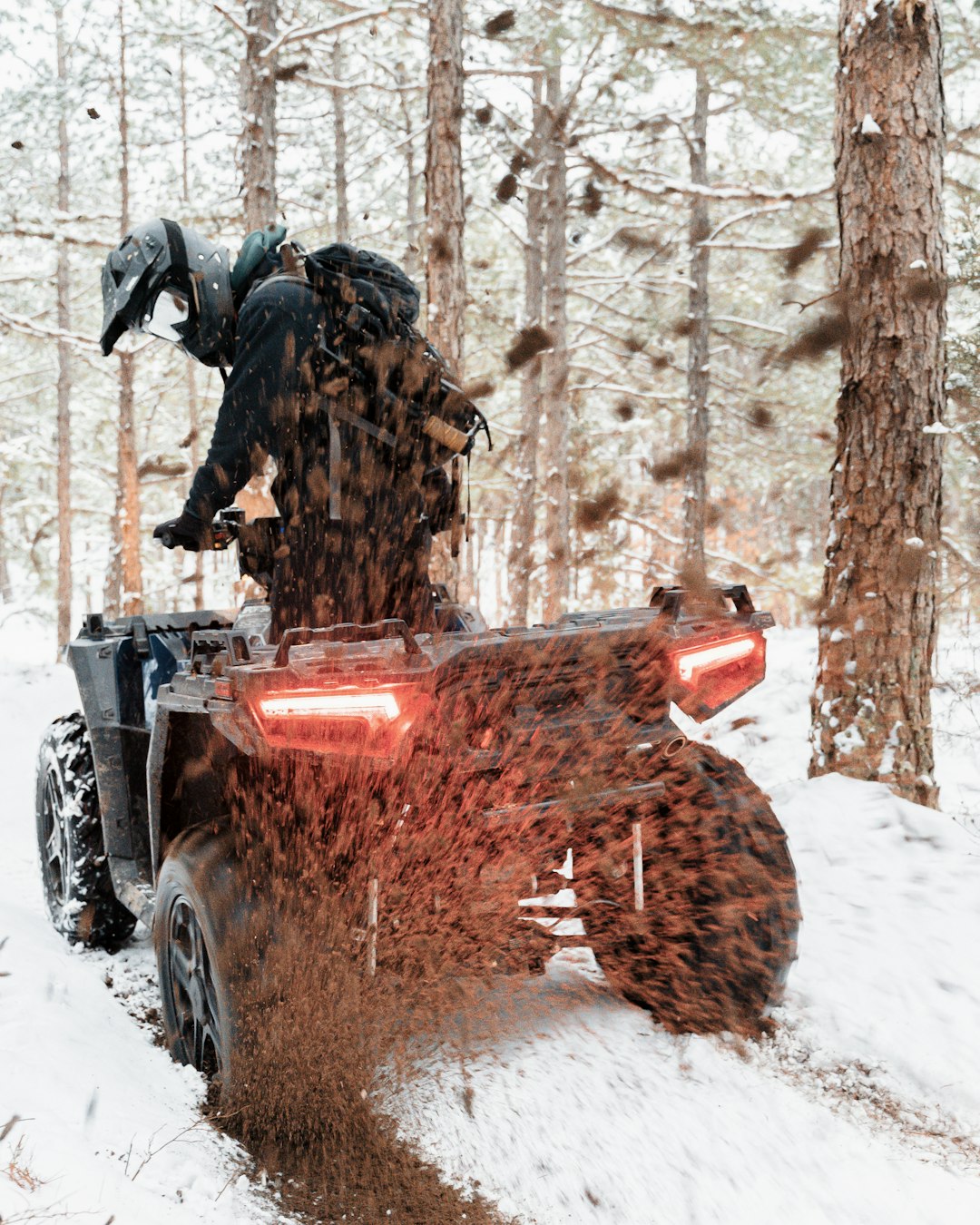
Tread should reflect the surfaces you actually ride. A mud pattern with tall, widely spaced lugs can clear soft, sticky ground, but it may feel abrupt on hard tracks and less settled on wet grass. A closer all-terrain pattern generally gives more continuous rubber contact on firm surfaces while still handling loose soil. The tread also affects steering feel, braking response, and how much debris is thrown into guards. Reviewing atv tyres by size and intended terrain is more useful than judging a pattern from its appearance in a catalogue image.
Tyre pressure changes the shape of the contact patch, which is the portion of rubber touching the ground. A modest pressure reduction can help a lightly loaded quad float over sand or soft soil. Too little pressure allows the sidewall to fold, the bead to lose its seat, or the rim to hit an obstacle. Use a reliable low-pressure gauge and check tyres while they are cool. The pressure printed on the sidewall may be a maximum figure rather than a riding recommendation, so start with the vehicle maker’s guidance and adjust only in small increments.
Load affects the pressure decision. Include the rider, fuel, tools, racks, accessories, and anything being towed when considering the tyre’s capacity. A quad carrying a chainsaw and recovery gear through a rocky paddock should not be set up like a lightly loaded machine crossing sand. Load rating describes the weight a tyre can support at a specified pressure and operating condition. Ply rating refers to a carcass strength classification, not necessarily the literal number of fabric layers. A higher rating may suit harder work, but it does not override the vehicle’s wheel, clearance, or fitment requirements.
Width and diameter deserve a physical check before fitting. A wider tyre can rub a suspension arm, steering component, or mudguard at full lock, especially when the suspension compresses. It may also pack mud into a narrow clearance. Machines with selectable four-wheel drive should not run noticeably different tyre diameters between axles, because the driveline can be forced to accommodate different rolling speeds on firm ground. Even tyres carrying the same size marking can have different actual dimensions as tread wears. Replace tyres in pairs on an axle where practical and keep wear reasonably even.
Directional tread needs attention during installation. Look for the rotation arrow on the sidewall and confirm that it points in the intended direction before fully inflating the tyre. Reversing a directional pattern can affect the way it clears mud or water and may change its braking behaviour. After fitting, spin the wheel by hand and inspect the gap around the guard and suspension. A useful workshop habit is to mark the old tyre’s position with chalk before removal, then compare the new tyre’s direction and clearance rather than relying on memory.
Uneven wear often points to a vehicle problem rather than a defective replacement. A rapidly worn inner or outer shoulder can result from incorrect camber, a bent component, poor alignment, or worn bearings. Camber is the inward or outward tilt of the wheel viewed from the front. If the quad pulls to one side after a tyre change, check pressures first, then inspect alignment, bearing play, wheel seating, and rotational direction. For practical atv tyre fitment guidance, relate the tyre’s stated use to the ground, load, and drivetrain rather than comparing price alone.
Inspect tyres before every demanding ride and again after water, sharp gravel, or heavy mud. Remove stones caught between lugs, look for cuts, bulges, exposed cords, and damaged valve stems, and tighten wheel nuts according to the vehicle maker’s procedure. Keep valve caps fitted and record pressure changes in a notebook if the machine works regularly. A plug is not a sound way to extend the life of a tyre with damage near the bead, sidewall, or compromised carcass. Replace the tyre when its tread, structure, or bead can no longer provide a stable seal and predictable control.